
Palestine Techno Park present:
AR/VR in Education: The Immersive learning Experience
The future is now & here with AR/VR Education.
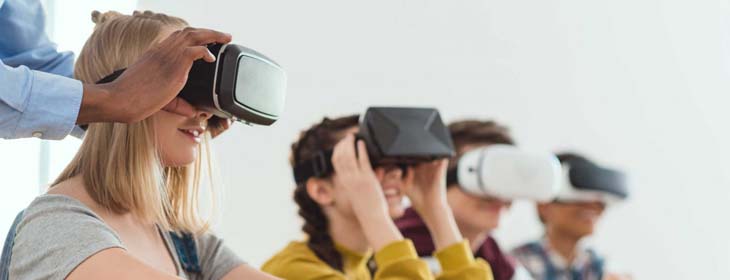
Schools around the world are introducing Virtual and Augmented Reality, AR/VR, applications in the classrooms. As per October 2018 there were more than 30 million students around the world who had the chance to experience these technologies in their classrooms. This number is expected be doubled just within the next few months due to the acceleration in the development of AR/VR educational applications and content and because schools and educational institutions are beginning to see the potential of AR/VR applications in education. More importantly is that students are loving this new experience of are more eager to learn and engage in the classroom. It is one thing to read history books to learn about the Roman Empire, but a completely different thing is when you are transported to ancient Rome and are exploring the Coliseum in an immersive virtual experience.
Recent studies showed direct correlation between AR/VR usage and increased engagement by students and this added engagement boosts learning outcomes considerably.
Supplementing Not Replacing
It is essential to believe that these new innovative tools and implementations that AR/VR can offer should not be a replacement of the traditional education systems. AR/VR should supplement classroom learning, not replace it. It's about using AR/VR to shake things up and frame the other work being done in the regular classroom. It's about stepping away from the mundane stuff and experiencing something more immersive and interactive.
Fun but Challenging
AR and VR developers should aim to engage students through storytelling, narrative and interactive gaming elements when developing educational AR/VR content. It is also important to challenge the students to rely on themselves to solve problems and think out of the box when interacting with a virtual experience. For example VR can offer a physical feeling of being in a science lab, which gives students confidence when they progress to an actual lab environment.
Affordable Set-Up
The development of AR/VR applications has become more cost effective, and as a result easier to scale enabling us to develop more interesting educational applications. At the same time VR tools, such as headsets, are becoming more affordable which results in a reasonable investment to set up a virtual classroom or science lab.
Workshop:
The Immersive Learning Experience:
How Virtual & Augmented Reality Could Change Education
Target:
Teachers, Students, Educational Institutions, AR/VR Developers
Agenda:
• What is Virtual Reality & Augmented Reality?
• VR in Education
• Education tools in AR/VR
• Creating Learning Content for AR/VR
• AR/VR Classroom in every school