

 From possibility to progress
Empowering women through technology and innovation
HerHack is an innovation and hackathon initiative aimed at empowering Palestinian women and youth to address social, economic and environmental challenges through technology. It brings together women, innovators and community advocates to explore real-world challenges, develop digital skills, and turn innovative ideas into practical solutions.
About HerHack
Through two complementary tracks — the Awareness Track and the Hackathon Track — HerHack creates opportunities for learning, collaboration and innovation, making technology accessible to women from diverse backgrounds, regardless of their technical experience.
Key focus areas
HerHack addresses three interconnected areas.
Protection & digital sovereignty
Promoting safer digital environments and addressing online violence and technology-facilitated harm.
Health, rights & bodily integrity
Improving access to reliable health information and inclusive digital solutions.
Socio-economic & climate justice
Advancing women’s economic empowerment, financial inclusion and sustainable environmental solutions.
The HerHack journey
Design thinking & challenge identification
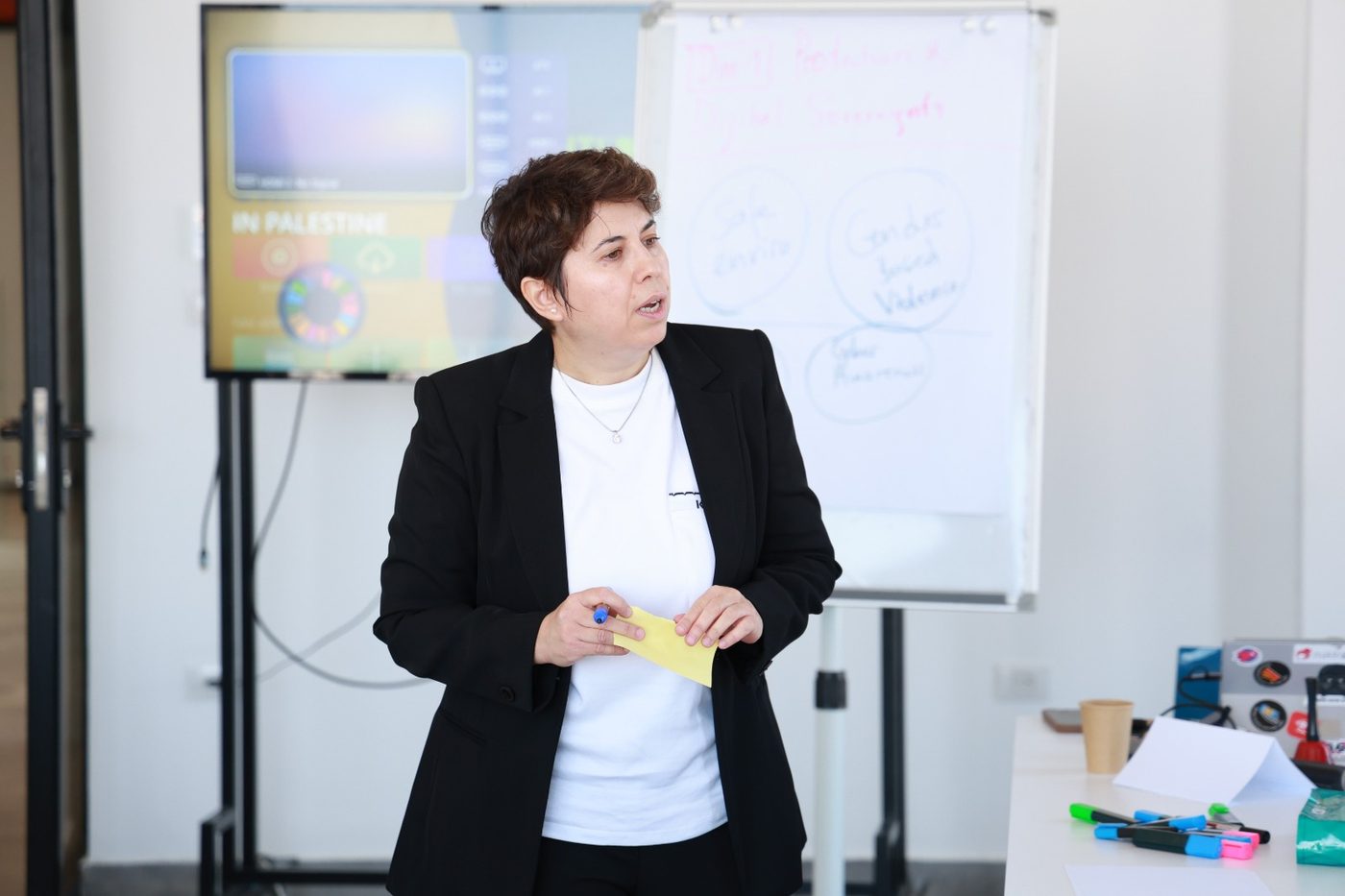
The journey begins with a Design Thinking Workshop, organised with the Advisory Committee and facilitated by Dr. Samah Abu Assab, Assistant Professor at Birzeit University.
The workshop brings together diverse expertise to explore the challenges facing Palestinian women, identify community needs, and apply a human-centred approach to problem solving. Its objective is three clear, well-defined challenge statements that reflect real community needs and become the foundation for the awareness activities and the hackathon.
Challenges drawn from the people who meet them
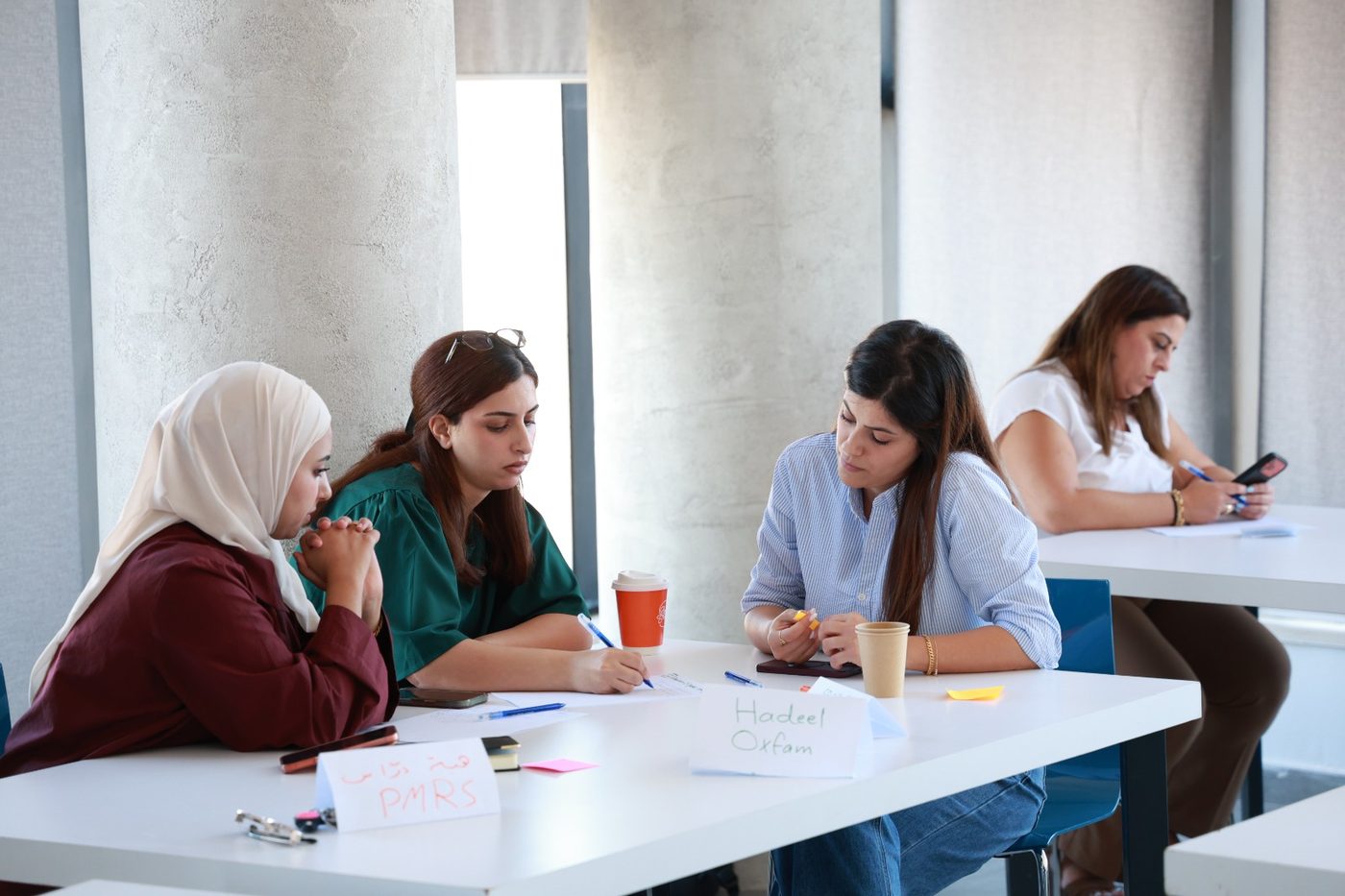
Representatives from women’s rights, health, disability inclusion and community development organisations worked through the challenges together, so the statements that guide the rest of the programme come from the organisations closest to them.
Two tracks, one mission
Following the challenge identification phase, HerHack offers two complementary participation tracks. Both welcome participants with technical and non-technical backgrounds.
Discover & learn
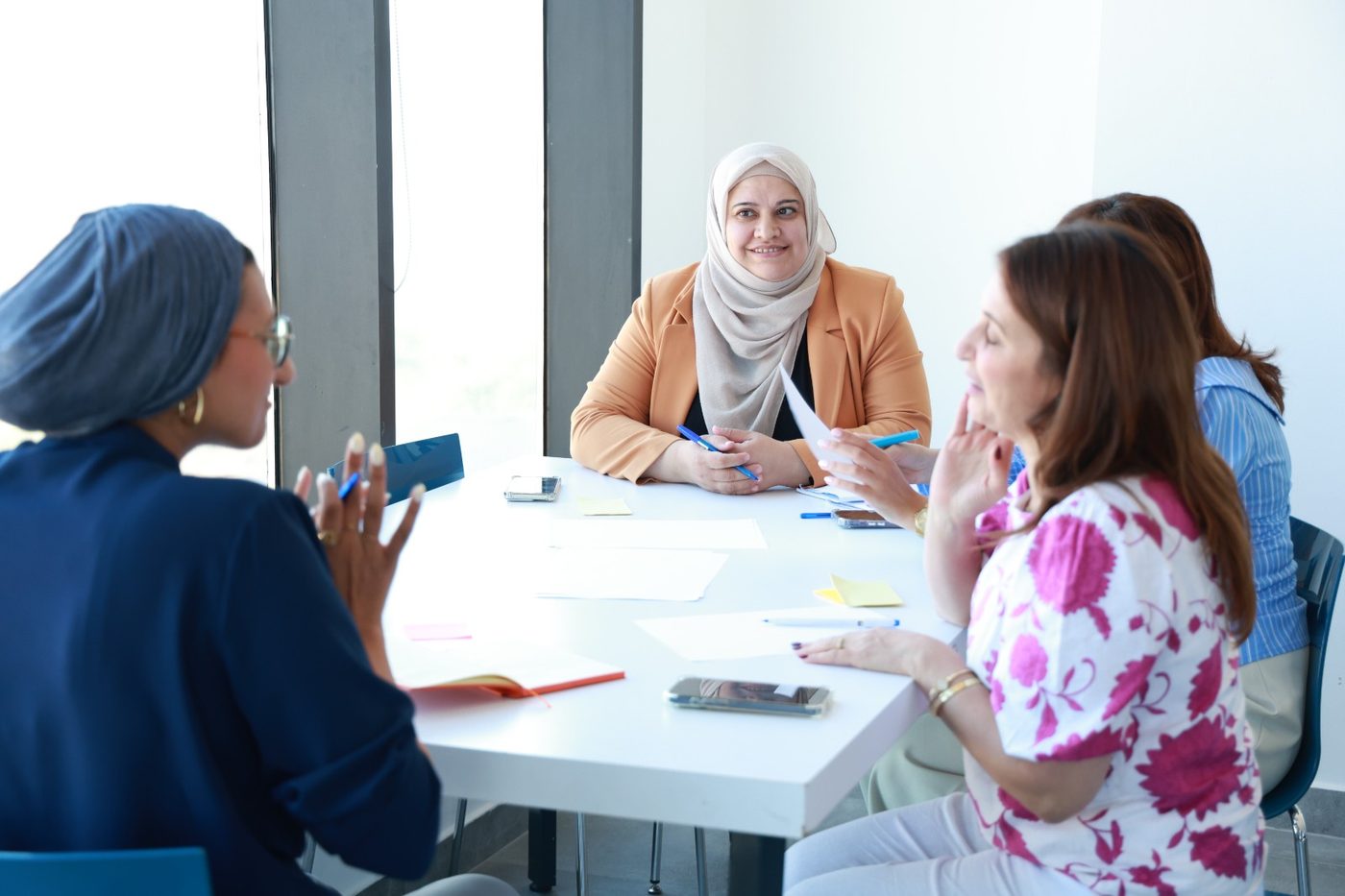
For women, social advocates and community members interested in how technology can address the challenges affecting their lives and communities. Through interactive sessions and the Her Innovation Circle, participants will:
- Explore challenges in digital safety, health and rights, and economic and climate justice.
- Share experiences and engage in discussion with experts and community members.
- Discover how accessible digital and no-code tools can address real-life challenges.
- Build awareness, confidence and connections in a supportive learning environment.
Innovate & build
For women and multidisciplinary teams turning innovative ideas into practical digital solutions to the identified challenges. The track follows five stages:
- Application & selection. 30 promising teams are selected on their ideas, motivation and potential for social impact.
- Pre-hackathon bootcamp. Intensive training in design thinking, business modelling, financial planning and pitching.
- Technical training & prototyping. Accessible digital tools, no-code solutions and AI-assisted technologies to build working prototypes.
- Hackathon & pitching. Shortlisted teams refine their solutions with specialised mentors and pitch to a judging panel.
- Prizes & incubation. Winning teams receive financial prizes and continued mentorship through Palestine TechnoPark’s innovation ecosystem.
Two tracks. One mission. Endless possibilities.
Whether you want to explore technology, develop new skills, or turn an innovative idea into a solution, HerHack offers a space to learn, collaborate and create impact.
One registration per person. You can choose both tracks on the form.
Advisory committee
HerHack is supported by an advisory committee bringing together organisations with expertise in women’s rights, healthcare, disability inclusion and community development.
The committee plays a key role in shaping the project’s direction, identifying priority challenges, and ensuring that the proposed solutions respond to the needs of Palestinian women and marginalised communities.